

You walk into the bridal boutique feeling excited and confident. You know your size; you’ve been wearing it for years. Then your stylist brings out a dress in what feels like a completely different size, and suddenly you’re questioning your wedding dress size. Sound familiar?
Take a deep breath. You’re not alone, and there’s absolutely nothing wrong with your body! Wedding dress sizing is one of the most misunderstood aspects of bridal shopping, and it catches nearly every bride off guard. The number on that tag doesn’t define you or your beauty; it’s simply a different measuring system that the bridal industry has used for decades.
Let’s dive into why wedding dress size feels so confusing and, more importantly, why the number doesn’t matter as much as you think it does.
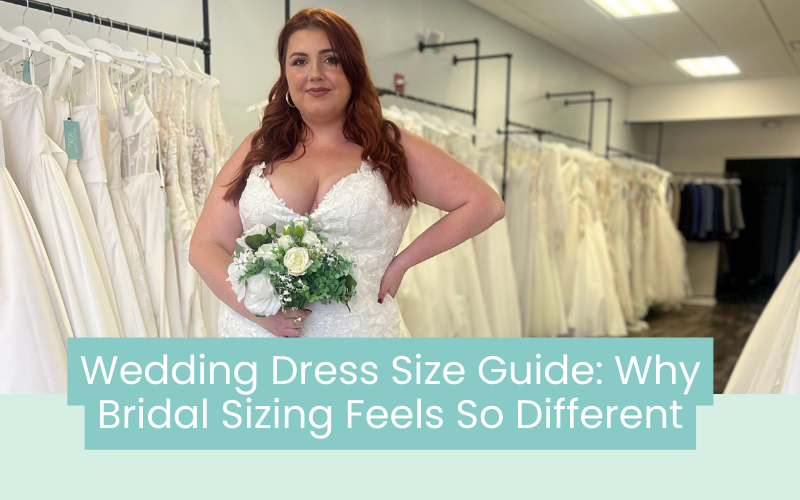
Why Wedding Dress Sizing Is So Different
Here’s the thing about wedding dress sizing: it’s stuck in the past, and not in a charming, vintage way. Bridal sizing standards were established decades ago when women’s average measurements were different from what they are today. While everyday clothing brands have adapted their sizing over the years, many bridal designers have held onto these traditional sizing charts.
A wedding dress size often runs about 1-2 sizes larger than what you’d typically wear in street clothes. So if you’re usually a size 8 in your favorite jeans and tops, don’t be surprised if your wedding dress comes in a size 10 or 12. It’s not you, it’s the system!
But here’s where it gets even more interesting: not all bridal designers use the same sizing standards. Some European designers might run smaller, while certain American brands might run larger. This means you could potentially wear three different sizes across three different dress designers, and they could all fit you perfectly.
Key differences between bridal and street sizing:
- Bridal sizes typically run 1-2 sizes larger than everyday clothing
- Bridal sizing is based on your largest measurement (usually bust or hips)
- Street clothing often uses vanity sizing, while bridal sizing tends to be more consistent
- Different designers may have completely different size charts
Bridal Sizing vs. Street Sizing
One of the biggest surprises during wedding dress shopping is discovering that your bridal size may be different from the size you wear every day.
Most bridal designers use traditional sizing standards that differ from modern retail clothing. As a result, many brides find themselves wearing a wedding dress that is one or two sizes larger than their usual street size.
For example:
| Street Size | Typical Bridal Size |
|---|---|
| 4 | 6–8 |
| 6 | 8–10 |
| 8 | 10–12 |
| 10 | 12–14 |
| 12 | 14–16 |
Keep in mind that every designer uses a slightly different bridal size chart. Your stylist will always recommend the size that best matches your measurements rather than the number on the label.
The goal isn’t finding a specific size. The goal is finding a gown that fits beautifully and allows room for professional alterations.
Focus on Fit, Not the Number
Your wedding dress size is just a starting point; think of it as a rough draft rather than the final product. Every designer creates their dresses with different proportions in mind, and every bride has a unique body shape. This is why alterations are such a normal part of the bridal process.
When you find “the dress,” your stylist will help you choose a size that gives the seamstress enough fabric to work with in all the right places. Sometimes that means going up a size to accommodate your bust, even if the waist will need to be taken in significantly. Other times, it might mean choosing a smaller size and letting out seams where needed.
The magic happens during alterations, where your dress transforms from a sample size into something that fits your body like it was made just for you. Because, in a way, it is! Professional bridal alterations can reshape a dress in ways that make it look completely custom to your figure.
Remember, even if you were to order a “custom” dress with your exact measurements, you’d likely still need alterations. Bodies are beautifully complex, and a truly perfect fit requires that personal touch from a skilled seamstress.
Wedding Dress Size Conversion Chart
Bridal sizing varies by designer, but this wedding dress size chart provides a helpful starting point when comparing measurements.
| Bridal Size | Bust | Waist | Hips |
|---|---|---|---|
| 2 | 32″ | 24.5″ | 35.5″ |
| 4 | 33″ | 25.5″ | 36.5″ |
| 6 | 34″ | 26.5″ | 37.5″ |
| 8 | 35″ | 27.5″ | 38.5″ |
| 10 | 36.5″ | 29″ | 40″ |
| 12 | 38″ | 30.5″ | 41.5″ |
| 14 | 39.5″ | 32″ | 43″ |
| 16 | 41″ | 33.5″ | 44.5″ |
| 18 | 43″ | 36″ | 46.5″ |
| 20 | 45″ | 38″ | 48.5″ |
Always refer to the designer’s specific bridal size chart, as measurements can vary from one collection to another.
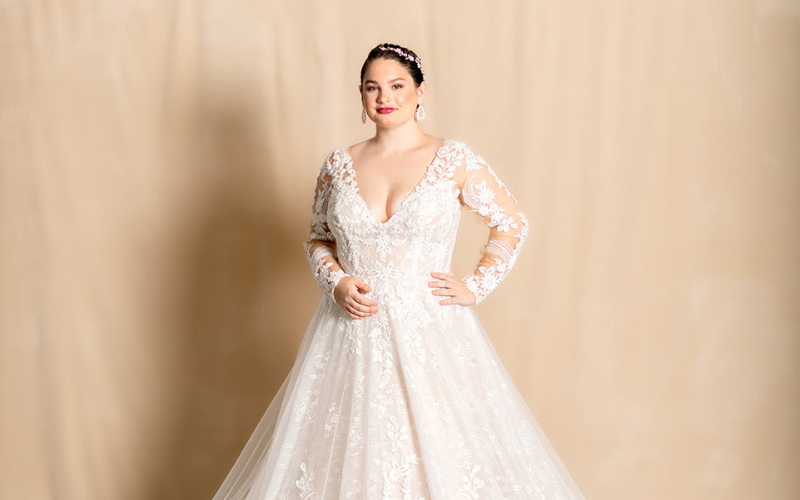
How to Measure for a Wedding Dress
Knowing your bridal dress measurements can help you understand how wedding dress sizing works before your appointment.
Bust
Measure around the fullest part of your bust while keeping the measuring tape level.
Waist
Measure around your natural waistline, usually the narrowest part of your torso.
Hips
Measure around the fullest part of your hips and seat.
Height
Many designers also consider your height and heel height when determining gown length.
For the most accurate results, have someone assist you while measuring and wear fitted clothing. Your bridal stylist will also take professional measurements during your appointment to ensure the best possible fit.
Common Questions Brides Ask About Wedding Dress Sizes
“What size will I be in a wedding dress?”
The honest answer? It depends on the designer, the style, and your measurements. The best approach is to let your stylist measure you and guide you toward the right size for each specific dress you try on. Don’t get hung up on being consistent across different designers—focus on what fits best for each gown.
“Why do I have to size up?”
Wedding dresses are typically ordered based on your largest measurement to ensure there’s enough fabric everywhere it’s needed. It’s much easier for a seamstress to take a dress in than to let it out (and sometimes letting out isn’t even possible). Sizing up ensures you’ll have a dress that can be altered to fit you perfectly.
“Will my dress be custom to my exact body?”
While most wedding dresses aren’t made completely custom, the combination of careful size selection and professional alterations creates a custom fit. Some designers do offer made-to-measure options, but even then, alterations are usually needed for that perfect, second-skin fit that makes you feel incredible.
Your Perfect Fit Matters More Than the Size
Shopping for your wedding dress should be about finding something that makes you feel radiant, not about hitting a certain size number. When you focus on how the dress makes you feel rather than what the tag says, you open yourself up to so many more possibilities.
Some brides find their dream dress in a style they never imagined would work for them. Others discover that a dress they thought would be “their size” doesn’t fit their body as beautifully as something completely different. Stay open to the experience and trust your stylist’s expertise; they’ve helped hundreds of brides find their perfect fit.
Your confidence and comfort are what will make you glow on your wedding day, not the number inside your dress that no one else will ever see.
Frequently Asked Questions About Wedding Dress Sizes
What size wedding dress should I order?
Your wedding dress should be ordered based on your current measurements and the designer’s bridal size chart, not your everyday clothing size.
Why are wedding dress sizes different from street sizes?
Bridal sizing follows older industry standards that have remained relatively unchanged, while retail clothing has adopted more flexible sizing practices.
How do wedding dress sizes work?
Wedding dress sizing is typically determined by your largest measurement, whether that’s your bust, waist, or hips.
Should I order a wedding dress bigger or smaller?
Most bridal stylists recommend ordering the size that accommodates your largest measurement. Taking a dress in is usually easier than letting one out.
Can a wedding dress be altered down several sizes?
Many gowns can be altered smaller, but the amount depends on the dress construction and design details.
How early should I get measured for my wedding dress?
Ideally, measurements should be taken when you’re ready to order your gown, usually 8–12 months before the wedding.
Do plus size wedding dresses use different sizing charts?
Most designers follow similar sizing principles, though measurements may vary slightly between collections.
Find Your Perfect Fit at K&B Bridals
Every bride deserves to feel celebrated and confident during her dress shopping experience. Our expert stylists are trained to focus on what matters most: how you feel in your dress, rather than getting caught up in numbers and wedding dress sizes.
At K&B Bridals, we create a pressure-free environment where you can explore different styles, designers, and silhouettes without worrying about sizing expectations. Our team understands that wedding dress sizing can feel overwhelming, and we’re here to guide you through the process with patience, expertise, and genuine excitement for your special day.
From your first appointment through your final fitting, we’re committed to helping you find a dress that fits your body beautifully and makes you feel like the best version of yourself.
Ready to find your dream dress (no matter the size)? Book your bridal appointment at K&B Bridals today and let’s celebrate YOU.